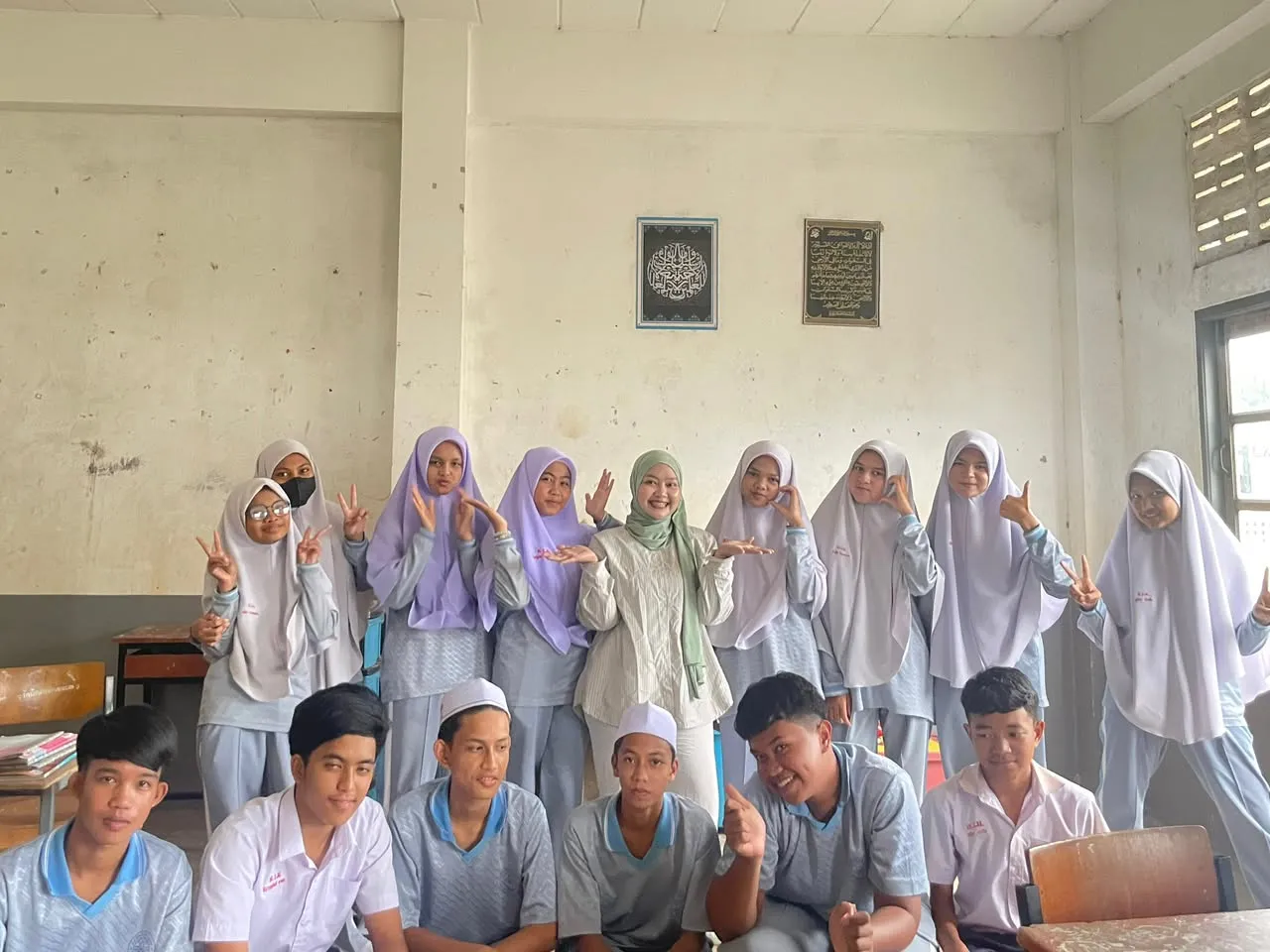
Unismuh MPBI Student Teaches English in Thailand
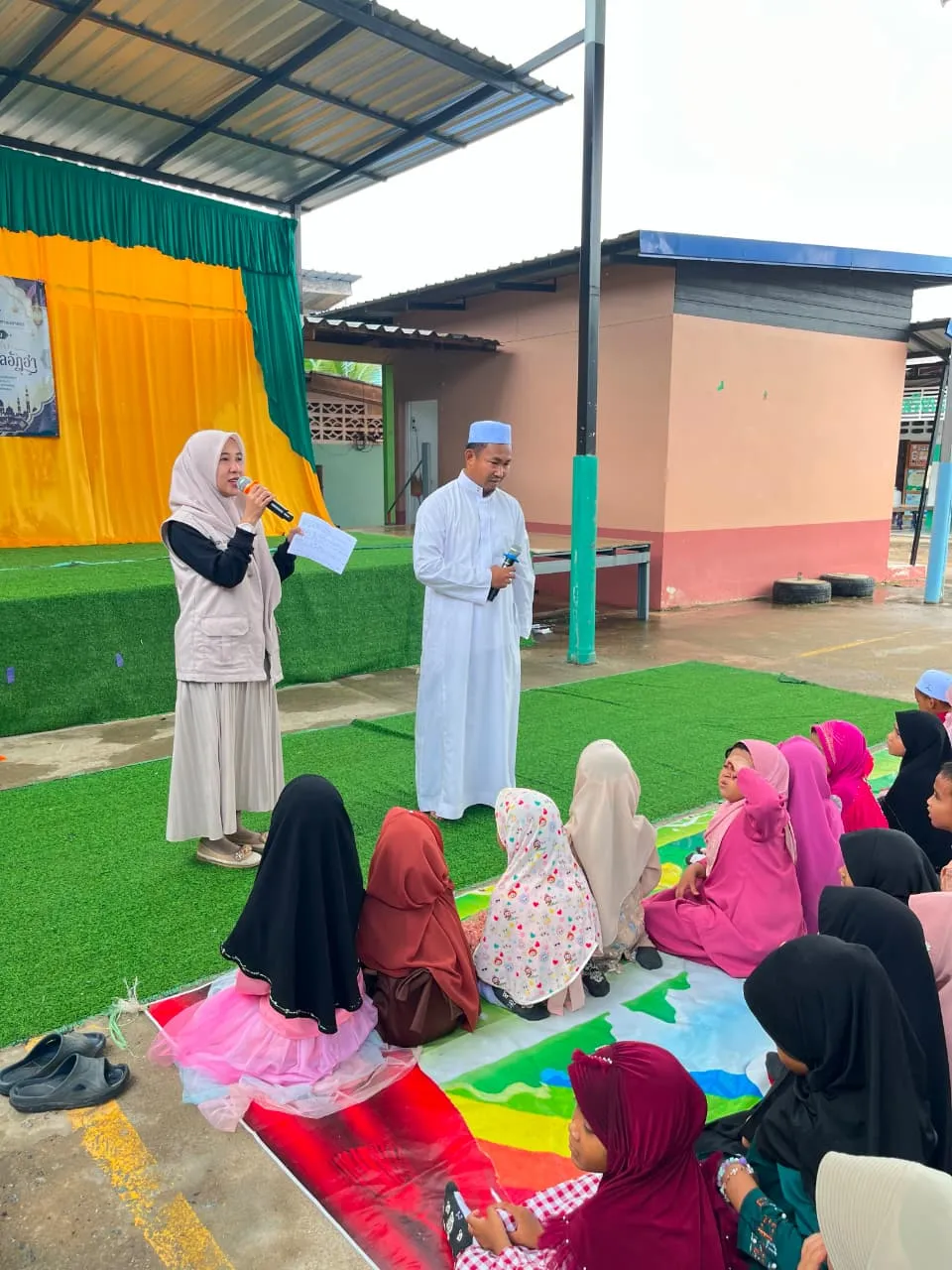
UNISMUH.AC.ID, MAKASSAR — A postgraduate student from the English Language Education Master's Program at Universitas Muhammadiyah Makassar (Unismuh Makassar), Riska Amaliah, conducted English teaching at Anubanwangmai Sartsanasart School, Thailand, on June 24, 2026. In this activity, she taught elementary and junior high school students, utilizing audio flashcards, worksheets, and English conversation videos to enhance their communication skills.
This learning experience was part of Unismuh Makassar students' international experience. Through a creative and interactive approach, Riska aimed to bridge language and cultural differences with the students and create a conducive learning environment.
Riska stated that teaching elementary school students requires engaging methods to maintain their enthusiasm for the lessons. Therefore, she utilized audio flashcards that allowed students to listen to pronunciation while seeing corresponding images.
"Despite our different languages and cultures, we have found ways to connect through English," said Riska.
In the learning process, elementary school students were introduced to basic vocabulary through images and sounds. For example, when learning the names of animals, students heard the pronunciation of the words in English while viewing engaging illustrations. According to Riska, this method made it easier for students to memorize and pronounce new vocabulary.
In addition, she also provided worksheets containing activities such as matching images, coloring, and completing words. Through these activities, students could practice reading and writing without feeling burdened by formal learning processes.
Riska acknowledged the biggest challenge in teaching elementary school students was the language barrier. She explained that some students often struggled to understand instructions given in English, necessitating a non-verbal approach to facilitate communication.
"Sometimes they don't understand my instructions in English. But I use body language, smiles, and pictures to help them," she said.
Meanwhile, when teaching junior high school students, Riska faced different challenges. Many students felt shy and hesitant to speak English. To overcome this, she used video conversations featuring everyday situations as examples of practical language use.
According to Riska, video conversations helped students understand that English is not just a subject in textbooks, but also a tool for communication in everyday life. After watching the videos, students practiced dialogues in pairs and created their own simple conversations.
"Initially, they spoke softly. But after several sessions, their voices became louder and their confidence grew," said Riska.
Dr. Radiah, M.Pd., Head of the English Language Education Postgraduate Program at Unismuh Makassar, praised this teaching experience in Thailand as an important learning opportunity for students to develop professional competencies and cross-cultural skills. According to him, language learning is not only about mastering content but also about developing communication skills in different environments.
"We encourage students to gain international experience because it enriches their pedagogical insights and strengthens their competencies as global educators. What Riska did demonstrates that creativity and adaptability are key to successful English language learning in a multicultural environment," said Radiah.
Radiah explained that the use of media such as flashcards, worksheets, and conversation videos aligns with the communicative learning approach developed by the English Language Education Postgraduate Program at Unismuh. He believes that these methods effectively increase student participation and build their confidence in using English.
"Success is not only measured by the amount of vocabulary students master, but also by their courage to communicate. When students start to speak, answer questions, and engage in dialogue in English, it is an important indicator that the learning process is going well," he said.
The change in students' attitudes was also visible through the morning conversation program, which was carried out together with the teachers. Every morning before class started, the teachers lined up in the school field and invited students to have simple conversations in English.
They greeted students with expressions such as "Good morning! How are you?" and asked simple questions related to their daily lives. Riska explained that initially, many students only smiled without answering, but the consistency of the program gradually bore fruit.
She revealed that after about a week, students started to respond to the greetings in English. They were even able to answer simple questions such as "I'm fine, thank you" and "Yes, I ate rice," which indicated an increase in their willingness to communicate.
"This morning program helps them see that English is not scary. English is a tool for friendship," said Riska.
Furthermore, Radiah said that the involvement of students in international activities also supports the internationalization of the campus. He hopes that more postgraduate students in English Language Education at Unismuh can participate in similar programs so that they can bring global experiences to practical education in Indonesia.
"We hope that experiences like this can be further expanded through sustainable international cooperation. In addition to benefiting students, this program also serves as a means of introducing Unismuh Makassar's academic quality to the global level," said Radiah.
The teaching experience in Thailand provided Riska with valuable lessons about the importance of patience, creativity, and a humanistic approach in education. She emphasized that children need fun media, while teenagers need support to build confidence, and all students need a safe environment to try and learn from their mistakes.
Through this experience, Riska hopes that more Indonesian students will be encouraged to take the opportunity to teach in an international environment. In addition to strengthening academic competencies, cross-cultural experiences can also enrich educational perspectives and promote intercultural relations through language, cooperation, and mutual understanding.
Sustainable Development Goals
Related News
BEM FISIP Unismuh Makassar Gelar Medical Check-Up Bersama BEM Fakultas Kedokteran
30 Jun 2026
Himagri Unismuh Makassar Padukan Expo Bisnis dan Tadabbur Alam
29 Jun 2026
Mahasiswi MPBI Unismuh Bangun Literasi Lewat Jurnalisme Sekolah di Thailand
26 Jun 2026