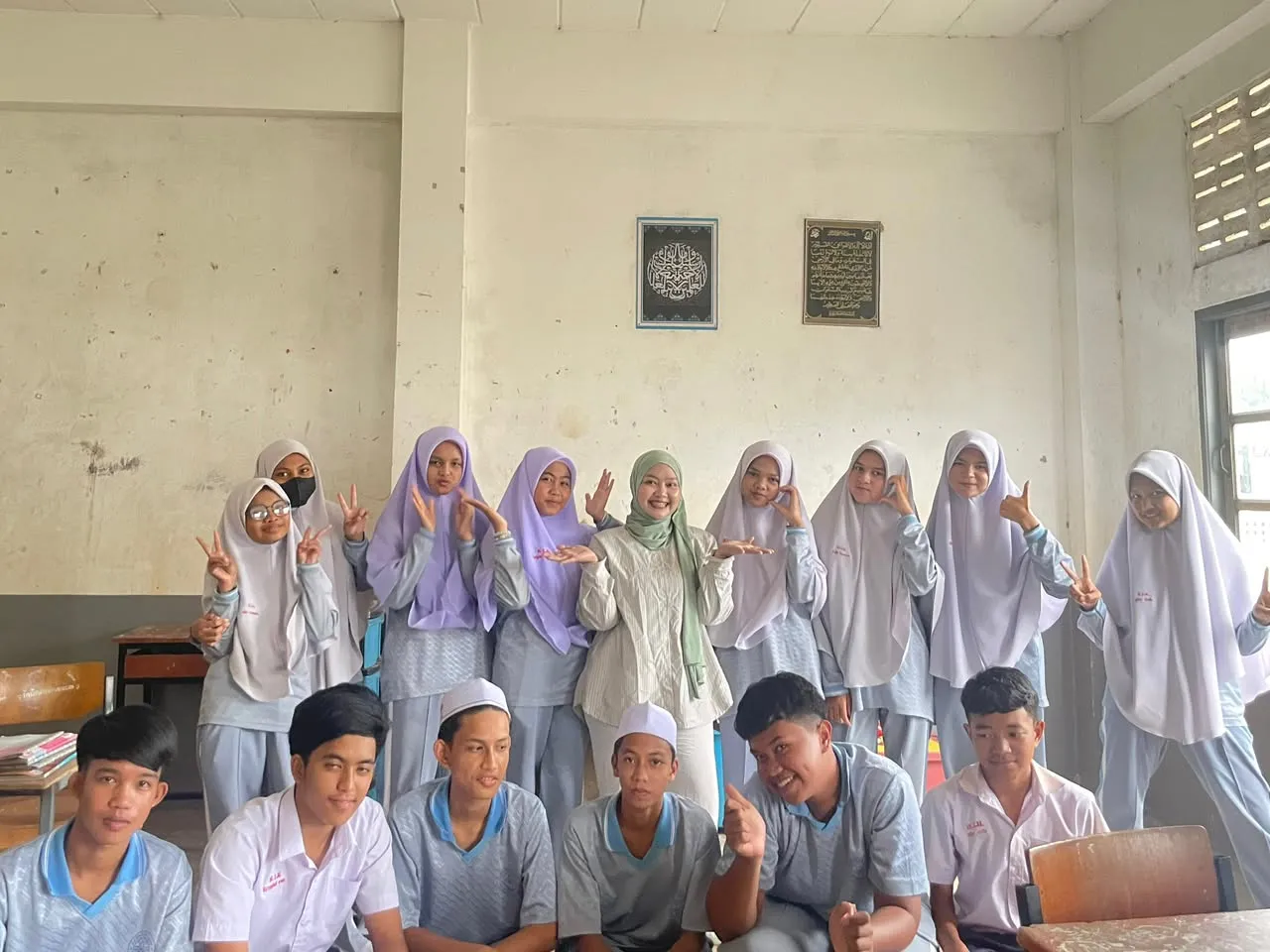
PAI Students of Unismuh Makassar Strengthen Islamic History Education in Thailand
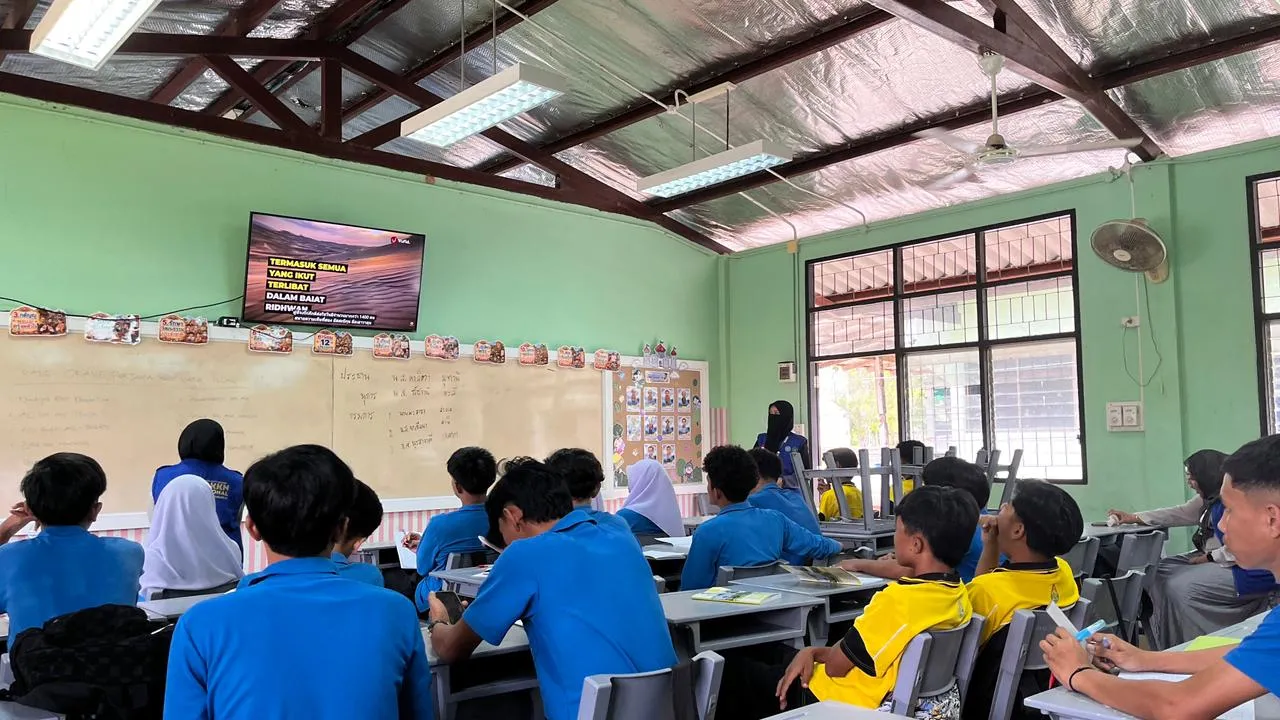
UNISMUH.AC.ID, Narathiwat, Southern Thailand — Students from the Islamic Religious Education (PAI) Study Program, Faculty of Islamic Studies (FAI), Muhammadiyah University of Makassar (Unismuh Makassar) conducted Islamic History lessons for 8th-grade students at Mattayom Sungai Padi School, Narathiwat, Southern Thailand, on Tuesday, June 23, 2026. This activity was part of the International Community Service Program (KKN) Batch 2 organized by the Institute for Development, Research, and Community Service (LP3M) of Unismuh Makassar.
The program is part of the International Community Service scheme that places students in several regions of Southern Thailand, including Narathiwat, Pattani, and Yala. This activity aims to introduce the history of Islamic civilization while instilling character values in students through a cross-country learning approach.
Unismuh Makassar PAI students, Aina Mardhiyah and Nur Ain Syafika, presented Islamic history material covering the missionary journey of Prophet Muhammad SAW, the era of the Khulafaur Rashidin (Rightly Guided Caliphs), and the development of Islamic civilization in the fields of science, education, and culture. The material was delivered in simple language to be easily understood by the students.
Learning was not only one-way but also utilized interactive methods such as group discussions, inspiring stories, question-and-answer sessions, and value reflection. This approach made the classroom atmosphere more lively and increased student participation in understanding Islamic history material.
Aina Mardhiyah emphasized that learning Islamic history not only focuses on knowledge but also on character building. She stated, "Islamic history holds many valuable lessons about struggle, honesty, responsibility, and the spirit of seeking knowledge. Through this learning, we hope students can draw inspiration from Islamic figures and apply it in their daily lives."
Meanwhile, Nur Ain Syafika assessed that understanding Islamic history is important for building awareness of identity and civilizational heritage. She said, "We want students to understand that Islamic civilization has made significant contributions to the development of science and global progress. By understanding history, they can better appreciate Islam's intellectual heritage and also be motivated to become a generation of high achievers with noble character."
Throughout the activity, the students of Mattayom Sungai Padi School showed high enthusiasm. They actively answered questions, participated in discussions, and expressed their views on the values that can be drawn from Islamic history. This positive response indicated a high interest in learning the material presented.
The school expressed its appreciation for the implementation of the International KKN program. According to Mattayom Sungai Padi School, the interactive learning methods used by Unismuh Makassar students were able to enhance students' understanding while enriching their learning experience. This was also deemed to strengthen cross-country educational relations.
The Head of the Islamic Religious Education Study Program at Unismuh Makassar, Dr. Abdul Fattah, S.Th.I., M.Th.I., appreciated the students' creativity in teaching. He stated, "PAI students are not only required to master Islamic material but also to be able to deliver it through creative and effective learning methods. This activity demonstrates the students' ability to integrate Islamic historical knowledge with an educational approach that can build the character of the learners."
The Dean of the Faculty of Islamic Studies at Unismuh Makassar, Dr. Amirah Mawardi, S.Ag., M.Si., viewed this activity as a form of tangible student contribution at the international level. She explained that the students' involvement in this program is an effort to introduce moderate and progressive Islamic values to the global community, while also strengthening Unismuh Makassar's role on the international stage.
The International KKN Batch 2 program, managed by LP3M Unismuh Makassar, involved 30 students from various faculties. Eight of them were from FAI, consisting of five PAI students, two Islamic Communication and Broadcasting (KPI) students, and one Arabic Language Education (PBA) student. This program serves as a platform for cross-cultural learning and community service.
Through this Islamic History learning activity in Southern Thailand, Unismuh Makassar PAI students affirmed the role of education as a means of knowledge transfer and character building. This activity is hoped to strengthen the understanding of Islamic values among the younger generation and open avenues for sustainable international educational collaboration.
Sustainable Development Goals
Related News
BEM FISIP Unismuh Makassar Gelar Medical Check-Up Bersama BEM Fakultas Kedokteran
30 Jun 2026
Himagri Unismuh Makassar Padukan Expo Bisnis dan Tadabbur Alam
29 Jun 2026
Mahasiswi MPBI Unismuh Bangun Literasi Lewat Jurnalisme Sekolah di Thailand
26 Jun 2026